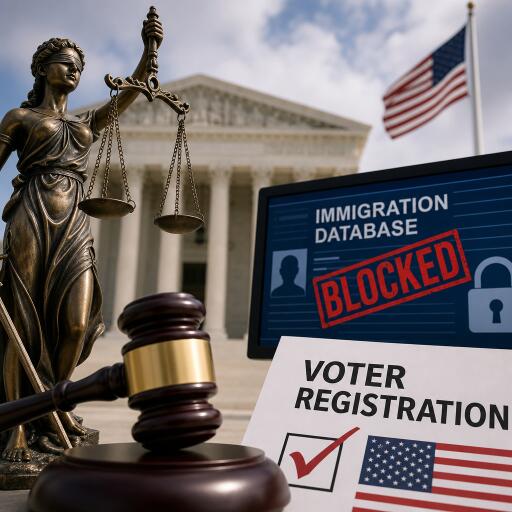
Judge blocks Trump’s use of revamped immigration database for voter checks
A federal judge in Washington, D.C., halted the administration from relying on a redesigned immigration-status database to audit state voter rolls for eligibility. The decision represents a setback for the executive branch’s efforts to increase federal involvement in how elections are run, especially with the midterm elections approaching.
Last year, the Department of Homeland Security updated a long-standing verification system used to confirm citizens and lawful status. The aim was to streamline how election officials could check whether registrants were legally eligible to vote, with broad access intended to speed up such confirmations at the local level.
In a lengthy ruling, U.S. District Judge Sparkle Sooknanan found that the overhaul could compromise accuracy and potentially disenfranchise eligible voters. The decision emphasized privacy protections, noting that the new arrangement risked exposing sensitive data and violating limits on how such information can be shared.
The court’s order blocks federal authorities from using the altered features to purge or challenge voter rolls based on the updated checks, at least while the lawsuit proceeds.
In responding to the ruling, the Department of Homeland Security’s general counsel defended the move as a legitimate effort to fix problems some critics say don’t exist, while criticizing the court’s decision as an obstacle to addressing those issues. The response framed the dispute as a clash over security versus other concerns raised by opponents.
The broader political climate features ongoing debates over the appropriate role of the federal government in elections. Advocates and lawmakers have argued for stronger federal oversight to curb potential irregularities, while critics contend that widening federal reach could undermine states’ autonomy in administering elections. Courts have repeatedly blocked or limited various executive initiatives aimed at tightening or expanding rules around voter eligibility and participation.
The case against the SAVE update centers on how the system allows batch searches and grants access to sensitive data, including Social Security numbers. Critics within several states have compared voter lists to the database and have removed some registrations after flags of noncitizens appeared. Advocacy groups say this has caused eligible voters to be removed from rolls, sometimes unfairly, due to outdated information or misclassification.
Proponents of the update warned that outdated data could leave gaps in voter rolls or hinder accurate matchups between registrants and immigration records. They argued that more robust verification could help prevent ineligible voting and strengthen the integrity of elections. Opponents, however, cautioned that misidentifications—such as naturalized citizens being mislabeled as noncitizens—could disenfranchise lawful voters.
The judge also pointed to privacy concerns tied to the expanded handling of personally identifiable information, arguing that safeguards on how such data is disclosed or used were not adequately maintained under the revised system. The ruling underscored the need to balance election security with the protection of individual rights.
As the legal process continues, the outcome will influence how future efforts to modernize voter verification tools are designed and deployed. The decision signals that any expansion of federal participation in voting administration will face intense scrutiny from the judiciary, civil-liberties groups, and states themselves.