
Indian Startup’s Patented Tech Promises Cancer Detection in Just One Breath – APN News
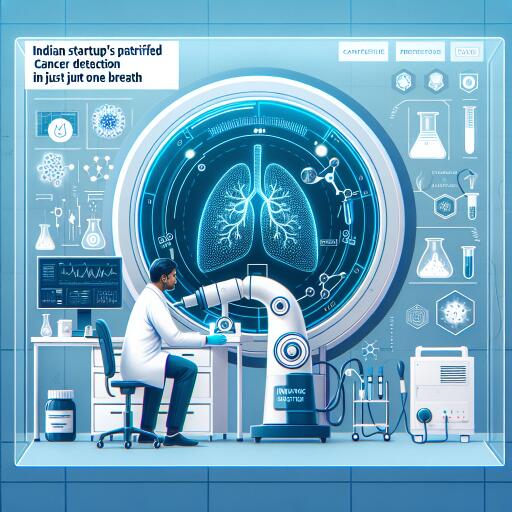
An Indian deep-tech venture based in Thiruvananthapuram has secured a patent for a compact sensor that reads volatile organic compounds (VOCs) from breath and sweat to flag potential illnesses in minutes. The breakthrough aims to push non-invasive screening into everyday settings—clinics, schools, airports, and beyond—bringing faster, more accessible diagnostics to the forefront.
A pocket-sized “digital nose” for rapid screening
Dubbed VolTrac, the system analyzes shifts in VOC profiles that occur when the body’s metabolism changes. According to the company, it can identify disease-linked patterns in under 90 seconds with lab-verified accuracy of up to 98.5%. The platform combines a proprietary chemi-resistive sensor array with AI models trained to recognize biomarker fingerprints associated with cancers, tuberculosis, diabetes, liver conditions, neurodegenerative disorders, and respiratory infections.
The device is designed for simplicity: breathe or perspire as part of a quick test, and the unit’s onboard intelligence interprets the VOC signature. Because each condition yields a distinct molecular footprint, the system can triage risk without drawing blood or relying on complex lab infrastructure.
Where it can make a difference
- Early screening for high-impact diseases, even in asymptomatic phases.
- Point-of-care diagnostics in rural or low-resource locations.
- Ongoing monitoring for at-risk groups and post-treatment recovery checks.
- Public-health surveillance through aggregated, anonymized VOC pattern analysis.
- Deployment across clinics, community health centers, airports, schools, and telemedicine networks.
From plant signals to patient care
The concept grew from research into how plants emit unique VOCs under stress. That curiosity spurred the development of ultra-sensitive sensors tuned to parts-per-trillion levels—overcoming longstanding limits in VOC detection and culminating in a 2024 patent. The same detection logic was adapted from monitoring crop stress to decoding human biochemistry for rapid medical screening and environmental safety.
Accubits Invent Pvt Ltd, led by chemical engineer Dr. Nidhin Sreekumar and operating out of Kerala’s Bio360 Life Sciences Park, blends biotechnology, materials science, and machine learning to build robust, portable tools. Co-founder and microbiology expert Dr. Aswathy emphasizes a mission to translate deep-tech research into systems that are affordable and scalable in real-world conditions.
DeTecX watches the air you breathe
Alongside VolTrac, the team is developing DeTecX, an always-on air hygiene and quality monitor for hospitals and busy public spaces. It checks airborne pathogens and microbial contamination in roughly 15 seconds and issues color-coded alerts—green (safe), yellow (caution), red (high risk)—to help prevent hospital-acquired infections before they spread. Beyond healthcare, DeTecX targets precision agriculture for early signs of plant stress and ripeness, and industrial or transportation settings for cabin hygiene, emissions tracking, and process safety via IoT integration and centralized dashboards.
Why this matters
- Early action: surfacing risk in the earliest stages can dramatically improve outcomes.
- Lower costs: rapid screening slashes reliance on expensive lab workflows and shortens turnaround time.
- Public-health intelligence: VOC datasets can strengthen outbreak detection and AI-driven forecasting.
- Greener healthcare: non-invasive tests cut down on biomedical waste.
Road to rollout
With patent protection in place, the company is preparing clinical trials and regulatory submissions, targeting commercial availability once approvals are secured. VolTrac and DeTecX are being engineered for affordability and mass production, with rollouts planned across hospitals, community clinics, schools, rural outreach, and telemedicine networks.
Looking ahead, the team envisions a universal olfactory platform—a “physical AI” that fuses diverse sensor arrays with large datasets to anticipate health risks even before symptoms appear. If successful, this approach could turn breath and ambient air into powerful, privacy-conscious diagnostics for everyday health management.