
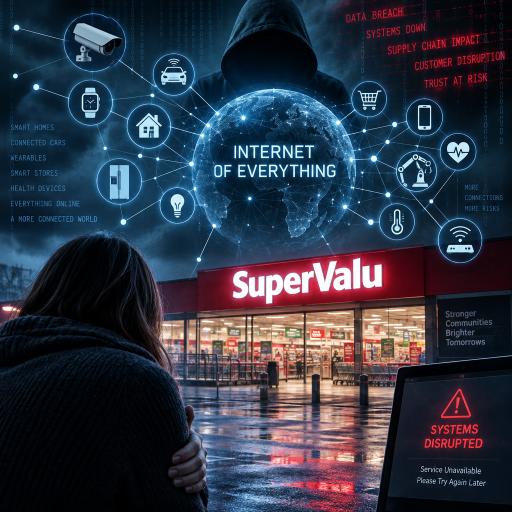
Internet of everything gives me the chills after SuperValu attack
The reported cyberattack affecting connected freezer systems at SuperValu and other businesses offers a stark warning about the rush to put everyday equipment online. When refrigeration units can be accessed remotely, a digital intrusion can quickly become a physical problem involving spoiled food, disrupted operations and significant financial losses.
Internet-connected devices are now commonplace. Fridges, heating controls, robot vacuum cleaners, fitness trackers and security cameras can all collect data or accept commands through apps and cloud platforms. These features may offer convenience, but they also create additional routes through which attackers can enter a network.
The concern is not limited to supermarkets or industrial machinery. Every smart device introduced into a home or workplace adds software that must be maintained, passwords that must be protected and vulnerabilities that must be fixed. Some products receive security updates for years; others may be abandoned by their manufacturers while remaining connected.
Artificial intelligence could make this threat more difficult to manage. Automated tools can help criminals scan large numbers of devices, identify weak security settings and exploit known flaws at speed. A poorly protected appliance may therefore become an easy target for disruption, surveillance or ransomware.
This issue also has implications for gaming and virtual reality. Modern headsets, consoles and accessories increasingly rely on cameras, microphones, biometric sensors and cloud services. Connected VR equipment can process information about a user’s movements, surroundings and physical responses. If security is treated as an afterthought, immersive technology could expose far more than a conventional online account.
The answer is not to reject every connected product. Remote monitoring can reduce energy use, identify faults and help businesses respond quickly to equipment failures. Smart devices can also improve accessibility and give users greater control over their environments. However, connectivity should solve a genuine problem rather than exist simply because it can be added.
Consumers and companies should ask basic questions before bringing another device online: Does it require a permanent internet connection? How long will it receive updates? Can default passwords be changed? What data does it collect? Will essential functions continue to work if its cloud service disappears?
Manufacturers must also take greater responsibility by providing secure default settings, clear support periods and reliable update systems. For critical infrastructure such as commercial refrigeration, connected controls should be isolated from general networks and backed by manual safeguards.
The promise of the “internet of everything” is effortless control. Its danger is that the same connection offered to an authorised user may eventually be discovered by someone with less innocent intentions. The smarter our appliances become, the more carefully we must consider whether connecting them is worth the risk.