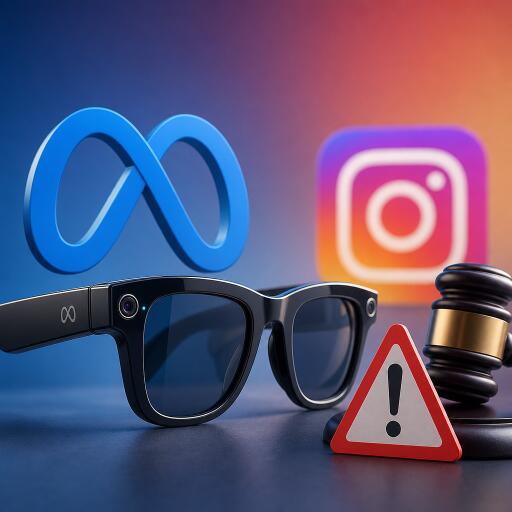

Meta Tightens Smart Glasses Rules, Warns Instagram Users
Meta has sharpened its rules around the use of AI-powered smart glasses, making it clear that users who break platform policies through connected wearables may face action on Instagram, including account suspension. The message is straightforward: content rules apply no matter whether a post, recording or live interaction comes from a smartphone or a pair of smart glasses.
The policy shift highlights a broader change underway in consumer technology. As smart glasses with built-in cameras, microphones and AI assistants move closer to the mainstream, tech platforms are under pressure to show they can manage the privacy, safety and moderation risks that come with them.
Meta’s warning suggests that wearable devices will not be treated as a grey area. If users capture, create or distribute content that violates platform rules, enforcement can follow just as it would on any other device. That includes concerns around unauthorised recording, harmful content and misleading AI-generated material.
Why Meta Is Tightening Control
The rise of AI-enabled wearables has created new challenges for social media companies. Smart glasses can record hands-free, respond to voice commands and potentially generate or enhance content in real time. While that adds convenience for users, it also raises difficult questions about consent, surveillance and authenticity.
Meta’s latest stance appears aimed at preventing misuse before it scales. The company is effectively telling users that wearable technology does not change their responsibilities under platform rules. For Instagram in particular, where visual content is central, that matters. A connected device that makes capturing and sharing media effortless could also make violations easier if guardrails are weak.
This tougher position also reflects a wider industry trend. Platforms and hardware makers are increasingly aware that AI products entering the mass market will be judged not only by innovation, but also by how responsibly they are governed.
Smart Glasses Are Moving Into the Mainstream
The timing is significant. The global smart glasses market has expanded rapidly over the past two years, driven by advances in generative AI, miniaturised hardware and hands-free computing. Analysts expect the sector to grow strongly through the decade, with market value projected to exceed USD 15 billion by 2030.
Competition is intensifying as major technology companies look to make AI assistants a part of everyday wearable devices. Smart glasses are increasingly seen as one of the next important consumer hardware categories, blending communication, real-world context and digital services in a way smartphones cannot fully replicate.
That growth, however, comes with scrutiny. Governments and regulators are paying closer attention to privacy protections, biometric data handling and the authenticity of digital content. As adoption rises, platforms are being pushed to show they have credible compliance systems in place.
No Special Treatment for Wearables
One of the clearest signals from Meta’s move is that wearables will not receive lighter moderation treatment than phones or other internet-connected devices. From a governance perspective, that is important. It closes off the idea that new hardware categories might slip through existing enforcement frameworks.
For users, the implication is simple: if content captured or shared through smart glasses breaches platform policy, the consequences can extend to their social accounts. For platforms, it establishes consistency at a time when device ecosystems are becoming more fragmented and AI-generated media is harder to police.
Policy experts have long argued that consistent enforcement across devices is essential if digital trust is to be maintained. Meta’s line on smart glasses suggests the company is trying to get ahead of a problem before wearable adoption reaches a much larger scale.
The Business Stakes for Meta
There is also a commercial logic behind the decision. Meta is building its position in AI hardware, and that ambition depends heavily on consumer trust. If users feel wearable devices are intrusive or poorly governed, adoption could slow. If advertisers see the ecosystem as risky, monetisation becomes harder.
By tightening enforcement, Meta is trying to balance innovation with safety. Stronger moderation may improve confidence among users, brands and regulators, even if it raises compliance costs. In the long run, transparent governance could become a competitive advantage for companies selling connected wearables.
As AI-powered hardware becomes a bigger growth engine for the tech industry, the rules set now will shape how these devices fit into everyday digital life. Meta’s warning is more than a policy update—it is an early sign that the next phase of wearable computing will be governed as closely as the platforms it connects to.