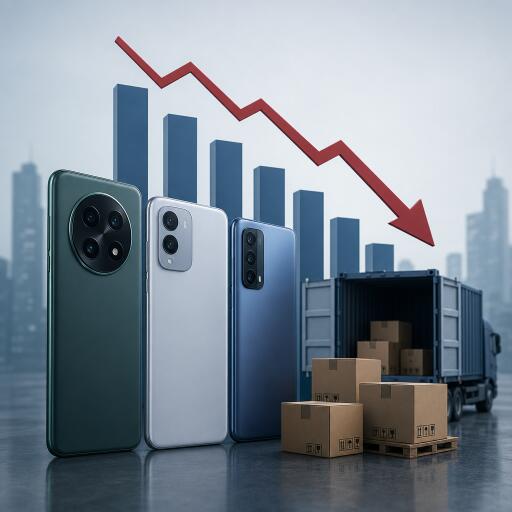

Oppo, Xiaomi And Vivo Scale Back Smartphone Shipments By Up To 30 pct: Report
Chinese smartphone heavyweights Oppo, Xiaomi and Vivo are setting more cautious shipment targets for 2026 as the AI-fueled chip crunch continues to disrupt consumer electronics. According to a report by Nikkei Asia, the trio has trimmed this year’s goals, with some forecasts cut by as much as 30 percent, reflecting persistent component constraints and shifting industry priorities amid the AI boom.
Why smartphone makers are pulling back
The ongoing surge in demand for artificial intelligence hardware—particularly high-performance chips and advanced packaging capacity used in data centers—has strained semiconductor supply chains originally fine-tuned for consumer devices. As chipmakers and foundries prioritize lucrative AI accelerators and the advanced packaging (such as 2.5D/CoWoS) they require, downstream markets like smartphones face longer lead times, tighter allocations for leading-edge nodes, and rising component costs.
For handset brands, this translates into difficult planning. With parts procurement less predictable, vendors are dialing in more conservative shipment targets, focusing on profitability and product mix rather than chasing volume at any cost. The strategy aims to reduce the risk of excess inventory and protect margins if component prices or delivery schedules fluctuate.
Who is affected—and by how much
- Xiaomi, Oppo and Vivo have reportedly reset their 2026 shipment targets, with some cuts reaching up to 30 percent, Nikkei Asia reports.
- The reductions reflect both supply-side constraints and a strategic pivot toward higher-value models where limited components can deliver stronger returns.
- While the report centers on these three Chinese brands, the ripple effects from the AI-driven chip squeeze are industry-wide, touching everything from application processors to memory and power management ICs.
How the AI boom is crowding out phones
- Foundry and packaging bottlenecks: Leading-edge capacity and advanced packaging lines are increasingly booked for AI accelerators, narrowing availability for mobile system-on-chips built on similar nodes.
- Memory prioritization: High-bandwidth memory and premium DRAM/NAND allocations are skewing toward AI servers, pushing up costs and lead times for certain smartphone configurations.
- Component price pressure: Tighter supply can nudge bill-of-materials costs higher, encouraging brands to streamline SKUs, emphasize mid-to-premium tiers, and extend model cycles.
- R&D focus shifts: Silicon vendors are investing heavily in AI compute, potentially stretching resources that might otherwise accelerate mobile roadmap cadence.
What this means for consumers
- Launch cadence: Expect a sharper focus on a few hero models, with longer sales lives and fewer incremental variants.
- Pricing dynamics: Aggressive discounting could soften in certain segments if component costs remain elevated or allocations stay tight, though competitive markets may still see promotional bursts.
- Feature prioritization: On-device AI features and power efficiency are likely to be prioritized, while less critical spec bumps may slip to later refreshes.
- Availability: Some color/storage options or specific regional SKUs could be limited if supply remains constrained.
Implications for the supply chain
Component suppliers tied to high-volume, entry-level smartphones may see softer orders as brands reallocate scarce parts to higher-margin devices. Conversely, vendors of flagship-class components—including premium sensors, displays, and modems—could benefit if OEMs concentrate their resources at the top end. Contract manufacturers and design houses may face shifting build plans and tighter quarterly visibility as brands balance demand signals with supply realities.
For chip designers serving both AI and mobile markets, portfolio management becomes critical. Any relief will hinge on how quickly foundries and packaging houses can bring new capacity online and how AI demand normalizes. If AI server growth plateaus or newly added capacity catches up, smartphone silicon supply could ease, allowing OEMs to revisit their shipment plans.
The 2026 outlook—and beyond
By trimming shipment targets now, Oppo, Xiaomi and Vivo are building in buffers against supply volatility while preserving room to ramp if conditions improve. It’s a pragmatic stance in a year when AI demand is rewriting the pecking order for semiconductor resources. The brands are likely to:
- Prioritize profitability over raw unit growth, especially in segments where differentiation and ASPs are strongest.
- Lean on platform reuse and selective upgrades to stabilize costs and shorten time-to-market.
- Invest in on-device AI experiences that can run efficiently on limited power budgets, differentiating without requiring the very latest process nodes across the entire portfolio.
What to watch next
- Foundry and advanced packaging expansions—and their timelines for meaningful mobile spillover.
- Qualcomm and MediaTek roadmaps, including node choices and AI/NPU capabilities aimed at mainstream tiers.
- Memory pricing and allocation trends as AI servers and smartphones compete for supply.
- OEM launch calendars and SKU breadth, which will signal how aggressively brands are managing constrained components.
Bottom line: The AI gold rush is reshaping priorities across the chip ecosystem, and smartphones are adapting. With shipment targets reportedly trimmed by up to 30 percent for 2026, Oppo, Xiaomi and Vivo are bracing for a tougher supply environment—while keeping options open should the balance of power between AI infrastructure and mobile devices shift back in their favor.