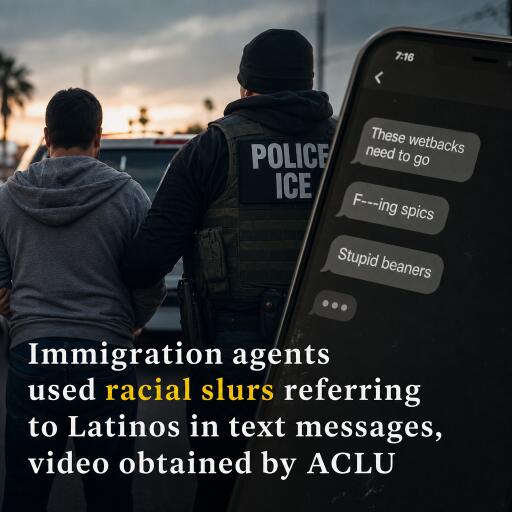

Immigration agents used racial slurs referring to Latinos in text messages, video obtained by ACLU
In Los Angeles last summer, a wave of federal immigration operations drew scrutiny after body-worn cameras captured moments that, alongside internal messages, suggested profiling by demographic and demeaning language directed at Latino residents.
Video from a raid at a major retailer in Hollywood and a collection of text exchanges reveal officers referring to Latinos with terms that critics describe as slurs. The communications also discuss broad “roving” patrols and other tactics that appear to rely on demographic cues rather than a clearly defined target. The materials accompany a court filing seeking to halt ongoing stops described as discriminatory.
Advocacy groups argue that the presented materials show the stops were shaped more by race than by individualized suspicion, noting that detentions extended beyond moments of question and included people who seemed to be citizens. The filing contends the evidence undermines claims that enforcement hinged on credible intelligence or articulable facts.
The motion was filed after expedited discovery ordered by a federal judge in a case challenging immigration enforcement practices in the Central District of California. The filing contends that new materials contradict statements previously made to the court that operations rested on legitimate intel and targeted descriptions.
According to the filing, the approach shifted from the era of focused investigations to a mass-arrest methodology. It cites a directive from headquarters instructing field offices to detain non-target individuals in public settings, followed by a coordinated effort that prioritized demographic cues over precise target descriptions.
Witnesses describe roving patrols and routine checks that captured more people than those identified as suspects, with notes referencing “soft counts” and a pool of possible individuals in a given area. A veteran officer reportedly suggested the aim was to broaden enforcement reach rather than pursue solid leads.
In one episode, officers detained three men at a bus stop and prepared to use extra restraints, raising questions about how decisions to detain are made and whether the process disproportionately affected a particular community. The filing also points to a pattern of focusing on older Latino men, arguing this demonstrates a racialized approach to enforcement rather than suspicion based on facts.
The document notes long-standing guidance discouraging disparaging language and emphasizes that the contested operations extended to individuals who are U.S. citizens as well as non-citizens, challenging the premise that the actions were narrowly targeted.
On the legal front, courts have weighed whether such detentions can be sustained under existing limits on immigration-related stops. The plaintiffs urge a ruling that bars dependence on perceived ethnicity as a basis for detentions, except when a clearly described target aligns with the person involved. Activists stress the need for transparency and accountability in enforcement activities, arguing that safeguards are essential to prevent biased practices.
As the case progresses, supporters of reform contend that current methods risk eroding trust and rights, calling on the judiciary to impose clear rules that ensure enforcement actions rest on individual suspicion and verifiable evidence rather than broad demographic profiling.