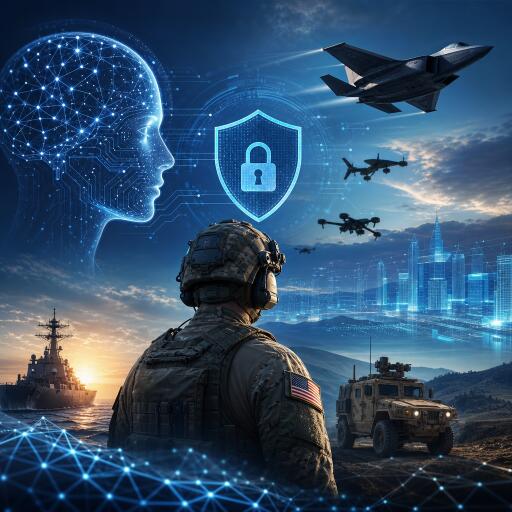

TechNet Orlando 2026 highlights AI, cyber innovation and accelerated acquisition for the future warfighter
Military, government, industry and academic leaders converged at the Central Florida Tech Grove on September 17, 2026, for the inaugural TechNet Orlando—an AFCEA-hosted forum dedicated to propelling modeling, simulation, training and readiness across the defense enterprise. From artificial intelligence and cyber tooling to digital engineering and immersive tech, the event spotlighted how fast-evolving capabilities are reshaping how U.S. forces train for the next fight.
Set in the nation’s premier hub for defense training innovation, the conference drew a cross‑section of the joint training community, including representatives from Team Orlando, Tech Grove, CPE ST3, the Defense Innovation Unit, the National Center for Simulation, the Defense Health Agency, the University of Central Florida, Army Contracting Command, Naval Air Warfare Center Training Systems Division, U.S. Marine Corps Program Manager Training Systems, and the Air Force Agency for Modeling and Simulation. Dozens of industry partners rounded out a packed agenda centered on delivering realistic, data‑driven, and secure training at speed and scale.
Acquisition as a warfighting function
Keynote speaker Lee James III, SES, deputy capability program executive for CPE ST3, underscored a fundamental shift in how the Army fields and sustains capability. In a battlespace defined by rapid tempo, constant sensing, and automated lethality, James argued that acquisition must operate as an integral element of combat power—not a back‑office afterthought.
“We have entered a combat environment characterized by unrelenting speed, persistent multi-sensor observation, hyper-competition, and automated lethality,” James said. “That is why acquisition is no longer a back-office support activity. Across the United States Army and the Department, acquisition is now recognized and operationally executed as a warfighting function.”
James detailed a modernization path anchored in AI‑enabled training, cloud‑native live-virtual-constructive (LVC) architectures, agentic behaviors, digital twins and unified data ecosystems. The goal: deliver adaptable, high‑fidelity training aligned to contested, multi‑domain operations while collapsing legacy stovepipes.
“We are converging our live, virtual, and constructive capability sets, moving away from distinct silos, running on local hardware racks with unique software baselines towards a converged global training environment that enables a persistent, integrated training capability at the point of need,” he said.
James also highlighted renewed program protection planning and an emphasis on coalition compatibility—prioritizing secure, interoperable training systems that can scale with partners and allies. That focus on secure-by-design delivery dovetails with a broader push to protect intellectual property, safeguard supply chains and maintain data integrity across increasingly connected training ecosystems.
“Everything we do, every contract, every prototype, every requirement, every simulation, every threat model, every training device, converges on a single, sacred purpose: To ensure the United States Soldier is trained, equipped, and prepared to win, decisively. We owe them overmatch,” James said. “This is our generational moment; this is our inflection point; let us keep the Soldier at the center, as we build the future of warfighter readiness together.”
Cybersecurity, compliance and the rise of AI-driven assurance
Dr. Daniel Daniels, chief information security officer and director of cybersecurity for CPE ST3, outlined how cybersecurity compliance, automation and generative AI are converging to harden Army cyber readiness while accelerating capability delivery under the Risk Management Framework (RMF). The message for industry: bring solutions that cut compliance friction, raise assurance and keep pace with dynamic threats.
From policy-to-implementation pipelines and automated control validation to AI‑assisted evidence generation, Daniels emphasized that pragmatic automation is essential to speed accreditation without sacrificing rigor—especially as training systems increasingly interconnect across cloud, edge and partner networks.
“The inherent call to action is we need some help here,” Daniels said. “I know there are smart folks out there. If you think you have a solution to this, I would love to hear what you have to say, so let’s connect, and let’s get to work.”
For cybersecurity teams, the takeaway is clear: the future training enterprise depends on resilient architectures, verified data flows and coordinated defenses that can be tested, instrumented and continuously monitored at scale. As AI accelerates both attack and defense, security leaders are looking for interoperability, transparent risk scoring and automation that complements—not replaces—human judgment.
Orlando’s training and simulation engine
Speakers repeatedly pointed to Orlando’s unique density of mission partners and innovators, which enables rapid experimentation and transition of emerging tech. This collaborative ecosystem blends operational insight with academic research and commercial agility to push the state of the art in training realism and digital transformation.
Participating organizations included:
- Team Orlando and Central Florida Tech Grove
- CPE ST3 (Headquartered in Orlando)
- Defense Innovation Unit (DIU)
- National Center for Simulation
- Defense Health Agency
- University of Central Florida
- Army Contracting Command
- Naval Air Warfare Center Training Systems Division
- U.S. Marine Corps Program Manager Training Systems
- Air Force Agency for Modeling and Simulation
- Industry partners across the joint training mission
By pairing operational need with a robust supplier base, the region has become a proving ground for AI‑driven tactics rehearsal, immersive instruction, and secure, multi‑domain LVC integration.
From prototype to persistent capability
TechNet Orlando offered industry an unfiltered view of government requirements and acquisition priorities. Program leaders and contracting officials used the forum to underscore interoperability, data standards, and security as non‑negotiables, while inviting novel approaches that compress delivery timelines.
AFCEA’s role as a convener remains central: providing a trusted venue for ethical information exchange among defense, homeland security and intelligence stakeholders focused on IT, communications and electronics. That connective tissue is increasingly vital as services converge training environments and push capability to the point of need.
Why it matters for the cyber and AI community
As training systems become data‑centric platforms, cybersecurity is integral to preserving realism, safety and readiness. The shift to cloud‑native, globally connected LVC architectures expands the attack surface, while coalition interoperability raises the bar for zero‑trust access, cross‑domain solutions and verifiable data lineage. Meanwhile, AI underpins everything from synthetic data generation and adversary behavior models to automated cyber defense and accreditation workflows.
The throughline from TechNet Orlando: speed with discipline. To achieve persistent, integrated training, the enterprise must align acquisition agility with cyber assurance, unify data under common models, and bake security and interoperability into every layer—from sensor and simulator to network and analytics.
About CPE ST3
Headquartered in Orlando, Florida, CPE ST3 fields and sustains the next generation of multi‑domain operations testing, training and information operations capabilities. The organization’s 980‑strong workforce—Soldiers, Army civilians and contractors—partners across the Army to enhance operational readiness and drive modernization.
With an emphasis on secure, interoperable training ecosystems and accelerated capability delivery, CPE ST3’s portfolio reflects the event’s core message: preparing warfighters for contested, data‑driven, and coalition‑enabled operations where cyber resilience and AI‑powered advantage are decisive.