
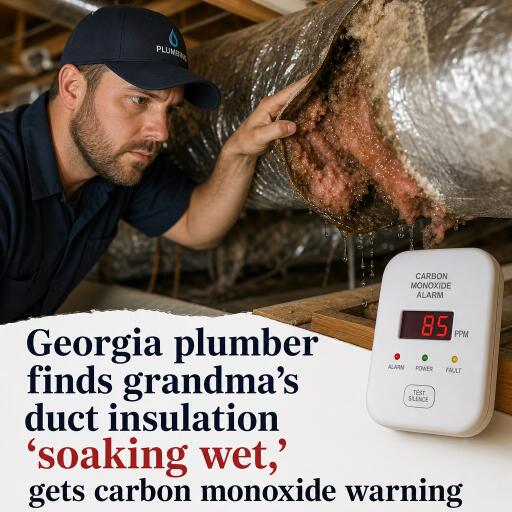
Georgia plumber finds grandma’s duct insulation ‘soaking wet,’ gets carbon monoxide warning
A routine call to service an aging home in Georgia revealed a troubling moisture problem around a furnace. The duct insulation in the area was saturated with water and dripping from the back of the unit, signaling potential safety risks in a house built several decades ago.
What happened
The homeowner, a grandmother living in Marietta, noticed that all the insulation around the system’s ducts was wet and continuously dripping near the furnace. The age of the equipment raised concerns about its reliability and whether moisture buildup might be tied to poor airflow or a drainage issue.
Possible causes
- Condensate drainage that’s become blocked or slow, causing water to back up into the ductwork
- Aging furnace components and restricted airflow due to accumulated dust and debris
- The potential for a cracked heat exchanger or other faults that could allow unsafe gases to mix with the indoor air
- Old refrigerant systems or coils that require professional assessment and cleaning
What to do
- Arrange a professional inspection of the condensate drain, the evaporator coil (A-coil), the furnace filter, and any outdoor equipment connected to the system
- Request a carbon monoxide test as part of the safety check, especially when dealing with older heating equipment
- Do not operate gas-fired equipment or the HVAC system until a licensed technician verifies it is safe to use
- If the system is very old or inefficient, discuss upgrading to a modern, energy-efficient furnace or heat pump with a qualified contractor
Safety first and potential upgrades
Homeowners facing moisture issues around an aging HVAC setup should seek a clear evaluation of safety risks and options for upgrading. If replacement is recommended, consider financing plans and maintenance agreements that spread out costs while ensuring ongoing service. Upgrading to modern, more efficient equipment can reduce energy use and improve indoor air quality over time.
Maintaining comfort in older homes
Regular maintenance is key to preventing moisture and safety problems in older houses. Schedule annual inspections, replace filters as recommended, keep vents and returns unobstructed, and ensure condensate drainage lines stay clear. A proactive approach helps protect both comfort and safety in homes with long-running HVAC systems.