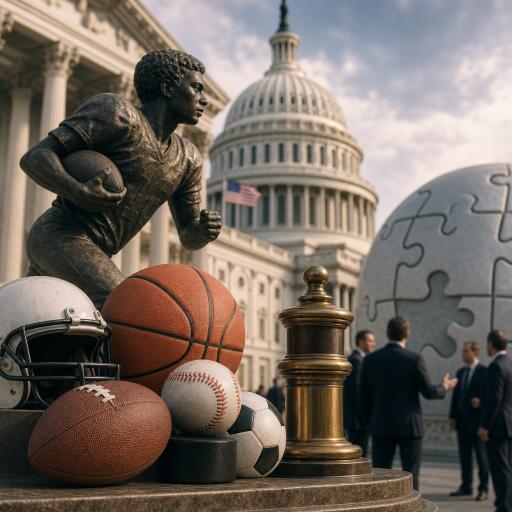
College sports bill inches ahead in the Senate even as Congress punts other issues
While Congress has stalled on several major policy fights this year, the Senate is showing unusual momentum on one surprisingly high-profile issue: college sports.
Lawmakers in Washington have struggled to move big legislation on government spending, defense policy, cryptocurrency regulation and artificial intelligence. Yet as the session winds down and midterm election pressures intensify, senators have managed to advance a bill aimed at reshaping the business and governance of college athletics.
The Senate voted twice this week to push the measure forward, signaling bipartisan interest in stepping into a fast-changing sports economy that many lawmakers say has outgrown its current rules.
The proposed legislation is designed to overhaul how college sports are regulated and financed. Supporters say the goal is to set clearer boundaries around rapidly rising spending, reduce the flood of lawsuits surrounding athlete compensation and recruiting, and bring more stability to athletic departments that have been operating in an increasingly unpredictable environment.
In recent years, college sports have been transformed by major legal and policy changes, especially around athletes’ ability to profit from their name, image and likeness. That shift has opened new financial opportunities for players, but it has also created a patchwork system shaped by state laws, court rulings, school policies and booster-backed collectives.
For many senators backing the bill, that fragmented structure is now unsustainable. They argue that without federal standards, schools, athletes and governing bodies will remain locked in expensive legal disputes and competitive imbalance.
The bill’s advocates describe the current state of college athletics as chaotic, with money flowing faster than the rules can keep up. Their pitch is that Congress can provide a national framework where the NCAA and conferences have struggled to do so on their own.
That makes college sports an unusual exception in a Congress otherwise marked by delay. Debates over must-pass spending bills, military policy, digital assets and AI oversight have all faced familiar gridlock. By contrast, the Senate’s willingness to move even incrementally on this issue suggests lawmakers see both political value and practical urgency in trying to act before the end of the session.
Still, moving a bill forward is not the same as sending it to the president’s desk. Any final legislation would still need broader agreement on how far Washington should go in regulating athlete pay, school spending, enforcement authority and the role of existing sports organizations.
Even so, the Senate’s back-to-back votes show that college athletics has become more than a sports story. It is now a policy battleground involving labor rights, education funding, antitrust law and the growing commercialization of amateur competition.
At a moment when Congress has avoided tackling many of the year’s hardest issues, college sports has emerged as one area where lawmakers appear at least willing to try.